TL;DR: Timaru’s business growth is hindered when regional businesses believe city competitors are superior. NB Architects in Timaru was profitable but stuck, turning away premium work due to self-doubt. By applying objective decision criteria and reframing their regional position as a strength, they secured major projects, including the Theatre Royal rebuild. Their capability never changed. Their confidence did.
Core Answer:
Self-doubt costs regional businesses 30-40% of potential revenue through pre-rejection and underpricing
Location is rarely the real barrier. Perception and internalised narratives create false limitations
Objective decision frameworks remove emotion from opportunity assessment
Regional positioning becomes a competitive advantage when framed as accessibility and local expertise
Evidence-based confidence-building breaks the self-fulfilling cycle of assumed inferiority
When NB Architects first contacted me through Oxygen8 Consulting, they asked for help with business strategy and direction. Standard stuff. What I heard underneath was more revealing: “We’re not sure if we…” This mindset is what blocks Timaru business growth for many regional firms.
They were profitable. They had clients. They were excellent architects. There was uncertainty about whether to pursue larger projects or settle for “good enough” at that level of work. The problem wasn’t their capability. The story they’d convinced themselves was true.
How Does Self-Doubt Create Financial Loss?
I sat down with them and asked a simple question: “What does a Christchurch architect do that you don’t?” They started listing things. Bigger teams, more resources, prestigious portfolios. So I pushed back: “Okay, but do you design high-end homes? Do you handle complex builds? Do you manage large budgets?”
They admitted yes, they did all of that. They’d done it before.
Then I asked the harder question: “So what’s different. Their capability or their confidence?”
That landed. You saw it on their faces. One of them said, “I suppose we assumed clients wanting premium work would automatically go to the city.” Based on what evidence? A story they’d been telling themselves.
Quick Take: The difference between regional firms and city competitors is often confidence, not capability. Self-doubt creates an invisible barrier to pursuing premium work.
What Does Stagnation Look Like for Timaru Business Growth?
The tangible signs were everywhere once I knew what to look for. They were pre-rejecting themselves. Someone would ring about a high-end residential project, and they’d almost talk themselves out of it during the initial conversation.
Their pipeline was (sort of) full, all safe, familiar work. Nothing that stretched them. Busy enough to feel productive, profitable enough not to panic, stuck in the same place year after year. They weren’t investing in their own development or marketing in any meaningful way. When you don’t believe you compete at a higher level, why would you invest in getting there?
That’s what stagnation looks like. Not dramatic failure, just sameness, with an undercurrent of “is this all there is?”
Bottom Line: Stagnation appears as comfortable busyness with profitable but repetitive work, paired with chronic underinvestment in growth because you don’t believe higher returns are possible.
How Do You Remove Emotion From Business Decisions?
I created a simple decision framework for enquiry qualification. Previously, they were making gut decisions out of fear. I gave them objective criteria: project budget, timeline, technical requirements, and client expectations. Then we mapped those to projects they had successfully completed.
This removed the emotion from it. Instead of “Do we feel worthy of this project?” it became “Do we meet the objective criteria?” Almost every time, the answer was yes.
Within a month, they’d taken on two enquiries they would have previously deflected. Both projects went smoothly. What shifted their perspective was the client feedback. One client said they chose NB Architects because they wanted a local firm that understood the region and was hands-on throughout the build.
The “local” positioning they thought was counting against them was a selling point when framed properly. Not as “small town” but as “accessible, responsive, and regionally connected.”
Key Insight: Objective criteria transform “Are we good enough?” into “Do we meet the requirements?” The answer is usually yes. Regional positioning becomes an asset when framed as responsive, accessible, local expertise.
What Strategy Won a Major Timaru Project?
Then came the Theatre Royal rebuild in Timaru. A major public project for Timaru business growth. I worked with them to develop a strategy that included meeting with as many people as possible who would eventually use the building. They listened to what people had to say. I suggested a slogan: “We Listen.” We use a full stop at the end to imply that, whilst the client is talking, we are listening and doing nothing else.
Some of the other architectural firms going for that project didn’t even visit Timaru. NB Architects got the job.
Phase two was to get Joshua in the local paper as much as possible and on social media, talking about the Theatre project. This raised the business’s local profile, especially among Timaru residents looking to build large houses. They sat up and took notice.
Strategy Summary: Direct engagement with end users, consistent local presence, and strategic media visibility created authority. Competitors who didn’t visit the site lost to a firm that listened.
What Is the True Financial Cost of Regional Self-Doubt?
Regional firms are constantly exposed to the narrative that “bigger is better” and “city equals sophisticated.” Over time, they internalise this idea that they’re somehow second-tier because of their postcode.
The cost is enormous, and mostly invisible. These businesses are leaving money on the table every single day. Turning away enquiries, underpricing their work, and not investing in growth because they don’t believe the return will be there. NB Architects were probably operating at 60-70% of their potential before we worked together. That’s years of lost revenue, lost opportunities, and frankly, lost fulfilment.
The insidious thing is that this narrative becomes self-fulfilling. Regional businesses believe they don’t compete, so they don’t try, which means they don’t win the work, which confirms their belief. A cycle that has persisted for decades.
Financial Reality: Regional firms operating at 60-70% of potential lose years of revenue and opportunities. The narrative becomes self-fulfilling when businesses don’t compete because they assume they’ll fail.
Which Question Breaks Through Self-Limiting Beliefs?
When I’m working with a regional business caught in that pattern, there’s one question that breaks through most reliably: “Show me a project you’re proud of. Now tell me why a city firm does it better than you did.”
They don’t answer it. They’ll start with vague things like “well, they’d have more resources,” but when I push for specifics, what would be better about the work itself, they come up empty.
That’s the moment. Suddenly, they’re confronted with the fact that their fear isn’t based on actual capability differences. It’s based on perception, assumption, and a story they’ve been telling themselves.
Breakthrough Moment: When businesses compare their completed work to hypothetical city-level competition, they realise their fear is based on perception, not on capability gaps.
What Do Timaru Businesses Need for Sustainable Growth?
NB Architects now has new premises, additional staff, and a relationship with another architectural firm to manage its workload. Here’s what matters: they had everything they needed to compete for premium work from day one. The technical skills, the experience, the capacity.
What they didn’t have was permission. The permission they were waiting for from someone external to tell them they were good enough. That permission isn’t coming. The market isn’t going to tap you on the shoulder and say, “You’re ready now.”
You have to give yourself permission, and the only way to do that is through evidence. Small steps that prove your assumptions wrong. Take one enquiry you’d normally deflect. Reframe one perceived weakness as a strength. Get one piece of client feedback that challenges your narrative.
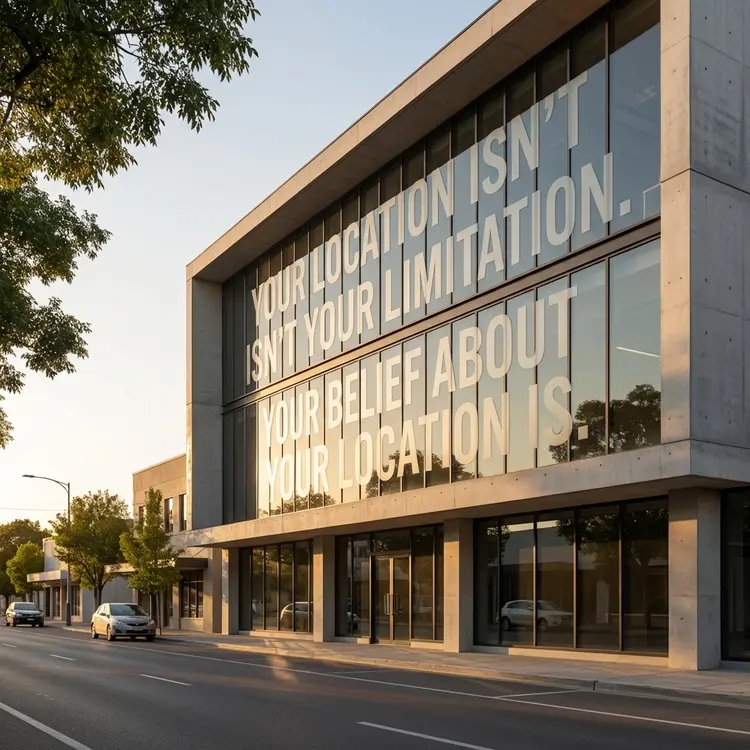
The transformation isn’t about becoming something you’re not. It’s about finally operating at the level you’re already at. Your location isn’t your limitation. Your belief about your location is.
Timaru businesses are sitting on unrealised potential because they’re measuring themselves against the wrong benchmarks and telling themselves stories that aren’t true. The cost of that over five, ten, or fifteen years is staggering. The tragedy is it’s completely unnecessary. The capability is there. It’s always been there.
Frequently Asked Questions About Timaru Business Growth
How do Timaru businesses identify if self-doubt is limiting their growth?
Look for pre-rejection behaviour. Are you talking clients out of working with you during initial conversations? Are you deflecting enquiries to city competitors before assessing fit? Are you underpricing to compensate for perceived regional disadvantages? These signals mean self-doubt is costing you revenue.
What is an objective decision framework for qualifying enquiries?
Create specific criteria independent of emotion. List project budget thresholds, timeline requirements, technical specifications, and client expectations. Map these against projects you’ve completed successfully. If the current enquiry aligns with past successes, capability exists regardless of sentiment.
Why does regional positioning become a competitive advantage?
Clients seeking hands-on involvement, regional knowledge, and responsive communication prefer accessible local firms. City firms offer scale but sacrifice proximity. Frame your location as a strategic benefit, not a limitation.
How long does it take to build confidence for Timaru business growth?
Evidence accumulates quickly once you start. NB Architects saw a shift in perspective within one month after accepting two previously deflected enquiries. Each success provides concrete proof that challenges the limiting narrative.
What percentage of potential revenue do regional businesses typically lose?
Businesses operating under self-imposed limitations typically function at 60-70% of capacity. This represents 30-40% of annual revenue lost due to turned-away work, underpricing, and failure to pursue premium opportunities.
Can Timaru businesses compete for major public sector projects?
Yes. NB Architects won the Theatre Royal rebuild by demonstrating local engagement and direct stakeholder consultation. City competitors who didn’t visit the site lost despite potentially having larger resources. Proximity and commitment outweigh size for many public projects.
What stops regional businesses from giving themselves permission to compete?
External validation that never arrives. Businesses wait for market confirmation that they’re ready, but internal approval is required. Start with evidence. Take one deflected enquiry. Document one success. Build proof that your assumptions are wrong.
How do you break the self-fulfilling cycle of regional inferiority?
Interrupt the pattern with small contrary evidence. Regional firms believe they don’t compete, so they don’t try, and they don’t win work, which reinforces that belief. One accepted premium project breaks the cycle by proving that capability exists independent of location.
Key Takeaways
Self-doubt costs regional businesses 30-40% of potential revenue through pre-rejection, underpricing, and avoiding premium work
Capability differences between regional and city firms are minimal. Confidence gaps create false competitive barriers
Objective decision frameworks remove emotional bias from opportunity assessment and reveal actual qualification for premium projects
Regional location becomes a competitive advantage when positioned as accessibility, responsiveness, and local expertise rather than a limitation
Evidence-based confidence-building through accepting previously deflected work breaks self-fulfilling cycles of assumed inferiority
External permission never arrives. Internal permission backed by documented success creates sustainable growth
Years of unrealised potential sit dormant in regional businesses, measuring themselves against incorrect benchmarks and internalised false narratives
Start Your Timaru Business Growth Journey
If you’re a Timaru business owner operating at 60-70% of your potential, blocked by self-doubt rather than capability, the path to growth starts with evidence. Take one premium enquiry you’d normally deflect. Reframe your Timaru location as a competitive advantage. Document one success that challenges your limiting narrative.
Timaru business growth happens when you stop waiting for external permission and start building internal confidence through concrete results. Your capability is already there. Your location isn’t the limitation. Your belief about your location is.
Ready to break through? Book a free consultation with Oxygen8 Consulting to develop objective decision frameworks that transform your Timaru business growth trajectory.