TL;DR: Google collapsible ads push organic search results further down the page whilst forcing users to scroll past advertisements first. Small NZ businesses need to shift focus from paid advertising to building content that dominates AI Overviews and Google Business Profile.
Core answers:
-
Google collapsible ads still force users to view them before hiding
-
AI Overviews now take priority over traditional search results
-
Redirect at least half your ad budget into structured content creation
-
Focus on AI-ready content first, Google Business Profile second, organic SEO third
-
Beautiful websites mean nothing without proper schema markup and semantic HTML
What Are Google Collapsible Ads
Google collapsible ads are the new “Sponsored results” sections rolling out globally in search results. They’re calling it a navigation improvement. I’m calling it what it is: revenue protection dressed up as user experience.
I’ve been watching search engines since the 1990s when I started building websites for clients. I’ve seen this pattern before. Google makes a change, frames it as helping users, but the real story is always about protecting their advertising business.
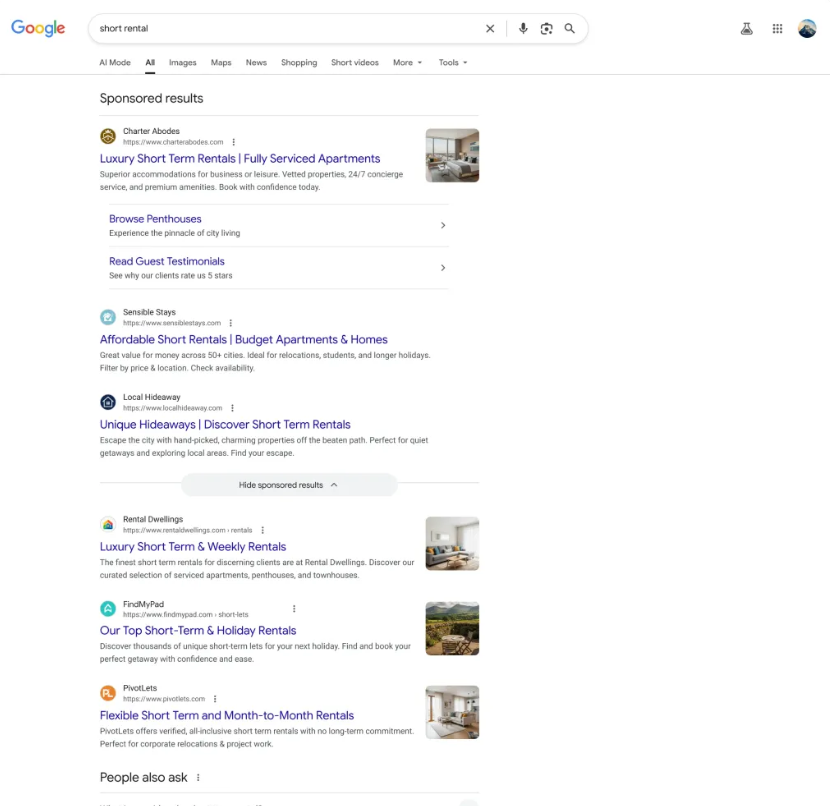
The new design groups up to four text ads into a collapsible section. Users can collapse it after scrolling past the ads.
These Google collapsible ads sit above or below AI Overviews. So now you’ve got AI content taking up screen space, ads you have to scroll past before you can hide them, and somewhere down the page, the organic search results.
If you’re relying on organic search to get found, you’re getting pushed further down.
Bottom line: The collapsible ad format pushes free organic results down whilst protecting ad revenue.
How Google Collapsible Ads Impact Small Business Visibility
A lot of businesses come to me spending money on Google Ads. Within a few months, I show them how a proper content marketing strategy replaces those ads entirely.
Here’s the conversation I’m having with clients right now: if you’re spending $1,500 a month on Google Ads and getting leads, fine for now. But what happens when you stop paying? The leads stop. You’re renting visibility.
Take at least half that ad budget and redirect it into building proper content. Write quality articles. Create videos that answer customer questions. Invest in proper website structure.
The content you create today keeps working for you next month, next year, five years from now. The ad you paid for yesterday? Gone.
With Google collapsible ads taking up more screen space, organic visibility becomes even more valuable. Once you’ve built your content foundation, ad costs come down because you’re getting organic traffic. You’re building an asset, not renting space.
The reality: Google collapsible ads make paid advertising less effective, increasing the value of organic content strategies.
Your New Visibility Strategy Beyond Google Collapsible Ads
With Google collapsible ads changing the search landscape, here’s what I’m telling clients to prioritise:
1. AI Content First
When you look at a Google page these days, it prioritises the AI output first, often even above the collapsible ads. You need content that AI systems want to pull from. Comprehensive, structured content that directly addresses customer questions.
I’m working with a client in the trades sector. Instead of a services page saying “we do plumbing,” we’ve built out detailed content around common plumbing problems their customers face. Step-by-step guides. Clear explanations of when to call a professional versus DIY. Costs involved. What to expect.
When someone asks an AI “should I fix this myself or call a plumber,” the AI pulls from my client’s site because it’s the most comprehensive, helpful answer.
2. Google Business Profile Second
If you’re a local business with a Google Business Profile, this needs attention. Most businesses don’t do any updates or posts on their profile. That’s been important since Google My Business came about, but now it’s critical.
3. Organic Search Third
Yes, traditional SEO still matters. But it’s no longer the top priority when AI Overviews, Google collapsible ads, and Google Business Profile results appear before your organic listing.
4. Paid Ads Last
Once you’ve got your content foundation built, your ad costs come down because you’re getting organic traffic. You’re building an asset instead of renting space.
Key shift: AI content and Google Business Profile now outrank traditional SEO and paid ads for small business visibility.
The Technical Gap Killing Your Visibility
I see a lot of beautiful websites that are gorgeous to look at, but they don’t rank anywhere on Google. No schema markup. No semantic HTML. None of the technical stuff.
When I ask the website designer how to add schema to the site, they don’t know what I’m talking about. Or at best, they’ve heard of it, but have no idea how to implement it, and pretty much have never added a facility for the client (or me) to do this.
Here’s the thing: I’ve got a lot of respect for website designers because they design the websites I could never do. I’m not artistic. But the reason a business gets a website is normally because they want more business. More customers or clients through people who visit their website.
So it’s important that website gets found, whether on Google or AI or wherever. To get found, you need to be taking into consideration all the technical stuff, not just how to make it look amazing.
I’m a programmer. I’ve been programming since 1981, online since 1988. I understand semantic HTML and schema markup. That’s the bridge between content and technical SEO most people miss.
The gap: Beautiful design means nothing without proper technical structure for search engines and AI systems.
Building Content That Ranks Above Google Collapsible Ads
Most businesses think “content marketing” means writing a blog post whenever they feel like it about whatever topic sounds interesting. That’s noise.
Here’s the system I use with clients: we start by mapping out the questions their customers are asking. I sit down with them and we list out every question they get asked repeatedly.
-
“How much does this cost?”
-
“How long does it take?”
-
“What’s the difference between option A and option B?”
-
“When should I do this versus that?”
Then we structure content around those questions using proper schema markup, clear headings, and semantic HTML. Each piece of content follows a clear structure: a specific question as the title, a direct answer up front, then detailed explanation, then related questions.
We’re creating a knowledge base that AI systems can easily pull from. It all needs to be interconnected with internal linking between related topics, consistent terminology, proper metadata.
The businesses doing this properly are the ones showing up in AI Overviews, above where Google collapsible ads appear. The ones blogging randomly? Invisible.
The system: Map customer questions, structure content with schema markup, interconnect everything, make it easy for AI to extract and cite.
Why Video Content Matters More Now
Everyone’s obsessed with social media video, TikTok, Instagram Reels. That has its place. But what I’m talking about is video content that lives on your website and YouTube and answers questions.
Google owns YouTube. When AI systems are pulling together answers, they’re pulling from text content but also from video content. I’ve been making educational videos since the 2000s, and what I’m seeing now is that well-structured video content with proper titles, descriptions, and transcripts is getting featured in AI Overviews alongside or sometimes instead of written content.
The key is the video has to be genuinely helpful. I’m talking about someone sitting down with their phone, good lighting, clear audio, and explaining something they know inside out. Small business owners are experts in their field. They need to share that expertise on camera in a structured way.
Video doesn’t have to be fancy. You can do it with just your voice and not your face showing if you want to, or even get a voiceover artist or AI voice to do it.
The format: Educational video content on YouTube and your website, properly titled and transcribed, gets pulled into AI Overviews.
The Fundamentals Haven’t Changed
Business owners have always needed to be thinking about what they want to achieve in their business and how they are going to go about achieving that through online (and offline) marketing.
The way Google is presenting the results, including Google collapsible ads, is another adjustment. The fundamental principles have always been the same.
Small business owners need to stop being reactive and start being proactive. Every time Google makes a change like this, I see businesses panic and scramble. But if you’ve built your online presence properly from the start with quality content that answers real questions, proper technical structure, and a presence across multiple platforms, then these Google changes don’t devastate you. They’re minor adjustments.
Your Website IS Your Business
Your online presence is your business. It’s often how people find you, how they decide whether to trust you, and often how they first interact with you. So treat it with the same seriousness you’d treat hiring a key employee or choosing your business location.
I see too many business owners who’ll spend $50,000 on a vehicle for their business but baulk at investing $10,000 in a proper website and content strategy. That website works for you 24/7. It never takes a holiday. It’s your best employee if you set it up right.
So invest in getting it done properly with someone who understands both the business strategy and the technical side. That’s where real, lasting results come from.
What to Do This Week
The first thing to do is decide on a direction. Where do you want to be going? What do you want to be doing with your business?
Then, you need to be thinking about the questions people ask you that you could be answering in your online presence, including the one about how much it costs.
New Zealand business owners need to take a more holistic approach to looking at their whole business structure. Look at what you want to be achieving through your online marketing. Look at the questions people are asking that you can answer on your website.
The people who have someone like me working with them, someone who understands not just how to build a website but how to make it rank on Google and how to get traffic to that website that becomes customers, those are the ones that are going to thrive.
Frequently Asked Questions About Google Collapsible Ads
How do Google collapsible ads work?
Google collapsible ads group up to four sponsored results into a section users can collapse after scrolling past them. The collapse button only appears after users have viewed the advertisements, ensuring ad exposure whilst appearing to give users control.
Do Google collapsible ads affect organic search rankings?
Google collapsible ads don’t directly affect your organic rankings, but they push organic results further down the page. This makes it harder for users to find your organic listings, reducing click-through rates even if your ranking position stays the same.
How do I get my content into AI Overviews?
Create comprehensive, structured content that directly answers customer questions. Use proper schema markup, clear headings (H1, H2, H3), and semantic HTML. Structure each piece with the question as the title, a direct answer up front, then detailed explanation. Interconnect everything with internal linking and consistent terminology.
Should I stop using Google Ads because of collapsible ads?
Not immediately. If you’re getting leads from Google Ads, keep them running. But redirect at least half your ad budget into building proper content. Over time, as your content foundation builds, your ad costs will come down because you’re getting organic traffic.
What’s schema markup and why does it matter?
Schema markup is code that helps search engines and AI systems understand and extract your content. Most website designers don’t know how to implement it properly. Without it, your beautiful website is invisible to AI systems pulling answers for AI Overviews.
How much should I invest in content creation?
For a business doing $1-10 million in turnover, $750 a month invested in content creation is not unrealistic. That could be two solid, comprehensive articles per month, or a combination of written content and video. The key is consistency and quality.
What’s the difference between Google Business Profile and organic SEO?
Google Business Profile is for local businesses and appears in local search results and Google Maps. Organic SEO is your website ranking in regular search results. Right now, Google Business Profile results often appear before organic results, making it a higher priority for local businesses.
How long does it take to see results from content marketing?
The content you create today keeps working for you next month, next year, five years from now. You’re building an asset, not renting space. Most clients see results within a few months, but the real value is in the long-term visibility you’re building.
Key Takeaways
-
Google collapsible ads force users to scroll past advertisements before hiding them, pushing organic results further down
-
Redirect at least half your Google Ads budget into building structured, AI-ready content that lasts
-
Prioritise AI content first, Google Business Profile second, organic SEO third, paid ads last (if at all)
-
Beautiful websites without schema markup and semantic HTML are invisible to AI systems
-
Create content by mapping customer questions, then structure answers with proper technical formatting
-
Educational video content on YouTube and your website gets pulled into AI Overviews alongside text
-
Your website is your best employee, working 24/7. Invest in it with the same seriousness as hiring key staff
Ready to Build a Business That Gets Found?
Most business consultants don’t understand the tech. Most marketing agencies don’t understand business strategy. I bridge that gap.
I help small NZ businesses grow with proper planning, efficient systems, and online visibility that brings in customers. Get in touch.